Unlocking the Cosmos: A Guide to the 3D Space and Astronomy Pack
There is a specific kind of magic that happens when design moves beyond the flat plane. For decades, we worked within the constraints of two dimensions, but modern audiences crave depth, realism, and immersion. This is exactly where the 3D Space and Astronomy Pack changes the game. If you have ever struggled to find stock imagery that doesn't look generic or overly processed, this collection of assets offers a distinct solution. It is not just a bundle of files; it is a toolkit designed to bring the majesty of the universe into your professional workflow.
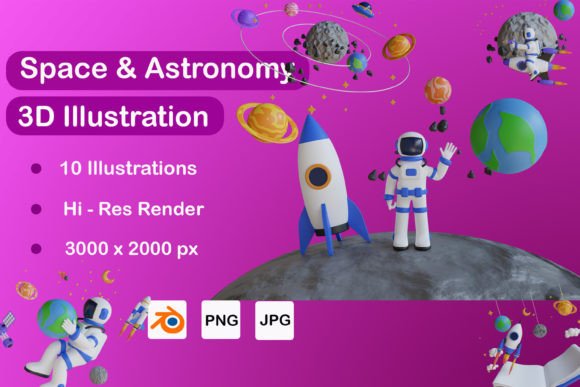
When you first open the directory, the quality is immediately apparent. You are looking at a curated set of files that includes 10 JPG files, 10 PNG files, and 10 Blender files. The visual style leans heavily into hyper-realism. We are talking about deep, rich nebulae, textured planetary surfaces, and lighting that mimics the harsh contrast of space. The personality of these assets is serious yet awe-inspiring. It avoids the cartoonish look often associated with space themes, opting instead for a cinematic aesthetic. Whether you are a designer looking for a premium font pairing or a marketer needing high-impact visuals, the depth of field and lighting in these 3D renders provide a sophisticated backdrop that commands attention.
Why 3D Assets Are the Future of Digital Branding
The inclusion of Blender files in this pack is perhaps its strongest selling point for serious creatives. In the world of web design and UI & UX, static images are becoming less engaging. Having access to the source 3D models means you aren't just stuck with a flat picture. You can manipulate the angles, adjust the lighting, and even animate the objects to create motion graphics that keep users on your page longer. For a startup in the tech sector or a gaming blog, this flexibility is invaluable. It allows you to build a consistent brand identity that feels dynamic and cutting-edge.
Consider the versatility of the file formats. The PNG files are perfect for layering. If you are creating social media graphics or composite poster design, the transparency allows you to drop a planet or a nebula into the background of a photograph without dealing with messy masking edges. The JPG files serve as high-resolution backdrops for editorial design or website hero sections. This blend of assets makes the 3D Space and Astronomy Pack a practical addition to any designer's library, removing the need to spend hours rendering scenes from scratch.
Strategic Applications for Creatives and Businesses
How do you actually use these assets to drive results? The answer lies in context. For entrepreneurs and small business owners, the "space" theme is incredibly versatile. It implies innovation, forward-thinking, and limitless potential.
- Tech & SaaS: Use the 3D planetary renders as backgrounds for your landing pages. They provide a modern, clean aesthetic that pairs beautifully with a sans serif font for headings.
- Education & Publishing: If you are a blogger or publisher covering science or science fiction, these assets can elevate your editorial design. A realistic moon texture can make a book cover stand out on a digital shelf.
- Event Promotion: Designing a gala or a virtual summit? The high-contrast nature of space imagery creates a dramatic atmosphere for promotional banners and invites.
For crafters and hobbyists, the PNG assets are excellent for print-on-demand projects or digital collage work. The depth of the renders adds a tactile quality to digital prints that flat vector art often lacks. It brings a level of professionalism to personal projects that is usually reserved for high-budget campaigns.
Integrating 3D Visuals with Typography
One of the biggest challenges in using busy or highly detailed backgrounds is maintaining readability. This is where modern typography comes into play. When working with the 3D Space and Astronomy Pack, your choice of typeface will make or break the design. Because the imagery is rich and textured, you generally want to pair it with a clean typeface. A geometric sans serif font often works best for UI elements and headlines, ensuring the text pops against the dark, moody backgrounds of space.
However, don't be afraid to experiment with font pairing. A bold, futuristic display font can look stunning when overlaid on a nebula, provided you use the Blender files to adjust the lighting so it supports the text hierarchy. The goal is to create a visual hierarchy where the 3D elements support the message rather than overwhelming it. This pack allows you to control that environment. By adjusting the source files, you can darken a background or blur a foreground element to ensure your logo design or call-to-action remains the focal point.
Practical Guide to Selecting and Testing Assets
- Evaluate the "Mood": Space imagery can range from cold and isolated to vibrant and energetic. Ensure the specific 3D render aligns with your brand's personality.
- Check the Lighting: Look at where the light source is in the 3D render. If you are placing text on the image, ensure there is enough negative space or shadow to support legibility.
- Test Scalability: Before finalizing a design, test how the JPG or PNG looks at different sizes. Does the detail hold up on a mobile screen? Does it look grainy on a 4k monitor?
Ultimately, the 3D Space and Astronomy Pack is about giving you control. It bridges the gap between amateur clipart and high-end 3D modeling. By leveraging the included Blender files, you are not just buying images; you are buying a customizable environment. This allows for a level of brand consistency and creative freedom that is rare in standard stock packs. Whether you are refreshing a website, launching a new product line, or designing a poster for a local event, these assets provide the visual weight needed to make a lasting impression.