Mastering E-Commerce App Landing Pages: A Design Guide
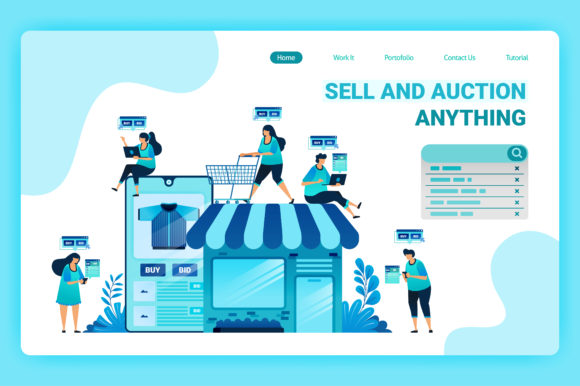
In the digital marketplace, your e-commerce app's landing page is the virtual equivalent of a flagship store's front window. It's the first impression, the sales pitch, and the user's initial experience all rolled into one. A well-designed landing page for an e-commerce app isn't just about looking good; it's a carefully engineered environment that guides visitors from casual browsing to confident purchasing. For designers, entrepreneurs, and small business owners, understanding the principles behind effective landing page design is crucial for converting traffic into loyal customers.
The Anatomy of a High-Converting E-Commerce Landing Page
A successful landing page for an e-commerce application balances aesthetic appeal with functional clarity. Visually, it often employs a clean, modern layout that prioritizes product imagery and clear calls-to-action. The design personality should reflect the brand's identity—whether it's minimalist and professional for a high-end retailer or vibrant and playful for a children's boutique. The overall appeal lies in its ability to create a seamless visual hierarchy that naturally guides the user's eye from the headline to the product showcase, and finally to the conversion element.
The key visual characteristics include:
- High-Quality Product Photography: The centerpiece. Images must be crisp, well-lit, and show the product in context or from multiple angles.
- Clear Value Proposition: A concise headline and sub-headline that immediately communicate the app's unique benefit.
- Prominent Call-to-Action (CTA): Buttons like "Shop Now," "Browse Collection," or "Get Started" need to stand out through color, size, and placement.
- Trust Signals: Elements like customer reviews, security badges, and recognizable payment icons build credibility.
- Streamlined Navigation: Minimal menu options to reduce decision fatigue and keep users focused on the conversion path.
Where This Design Approach Shines: Applications and Projects
The principles of an effective e-commerce app landing page extend far beyond the app itself. This design framework is incredibly versatile and can be adapted for numerous projects across creative, branding, and marketing domains. A well-structured landing page template serves as a foundational design asset that ensures consistency and professionalism.
Consider these practical applications:
- Web and Website Design: Use the layout and component structure to build dedicated product pages, promotional sections, or entire online stores. The emphasis on visual hierarchy and CTA placement is directly transferable.
- Marketing and Advertising: The same persuasive elements work for digital ads, social media campaigns, and email marketing. A cohesive brand identity is maintained when the landing page aesthetic informs your banner ads and social media graphics.
- Print Media and Collateral: The clean, graphic nature of a good landing page translates surprisingly well to printed materials. Think product flyers, lookbooks, or catalogues where the goal is to showcase items elegantly and provide clear information.
- Presentation and Pitch Decks: For entrepreneurs and small business owners, the structured, persuasive layout can be repurposed for investor presentations or wholesale pitches, focusing on product benefits and clear next steps.
Influencing User Perception and Engagement
The design of your landing page directly shapes how users perceive your brand and interact with your products. A cohesive visual system, from typography to color palette, builds recognition and trust. Using a premium font pairing—one for impactful headings and another for readable body text—can elevate the perceived quality of your entire platform. For instance, a clean sans serif font for buttons and navigation suggests modernity and ease of use, while a sophisticated serif font for product descriptions can add a touch of elegance and reliability.
This careful typographic selection influences readability and visual hierarchy. It guides users through the content without friction, making the experience feel intuitive and professional. Consistency in these design choices across all touchpoints—from the app to the website to social media—fosters a strong, recognizable brand identity. Users begin to associate that specific visual style with your quality and service, which is a powerful driver of loyalty and engagement.
Practical Guidance for Implementation
Adopting this design approach requires thoughtful execution. Start by evaluating your specific project needs. Is your primary goal to launch a new product collection, or to drive app downloads? Your objective will dictate the layout emphasis. When selecting design assets, such as graphic templates or font families, look for editable formats like EPS 10 and high-resolution JPEGs. This ensures you have the flexibility to customize elements for both web design and print media ads without losing quality.
Testing is non-negotiable. Before finalizing, review your landing page design on multiple devices to check responsiveness. Test your font pairing for readability at various sizes—what looks good on a desktop monitor may be illegible on a mobile screen. Always verify the commercial licensing of any fonts or graphic elements you use, especially if the project is for a client or for commercial sale. A beautifully designed landing page is only effective if it's legally sound and technically robust.
Ultimately, a great e-commerce landing page is a tool built with purpose. It combines strategic layout, compelling visuals, and clear messaging to create a pathway for the user. By focusing on these core principles, you can build digital experiences that not only look professional but also perform effectively, turning your online space into a true destination for your audience.